 Find a calculator ↗
Practical guides for better business decisions
Understand the numbers behind pricing, costs, staffing, and operations. Explore clear explanations, original worked examples, and free calculators you can use with your own figures.
20 practical guidesBusiness planningExplore the guidesChoose a business question to explore
 Agency & Consulting
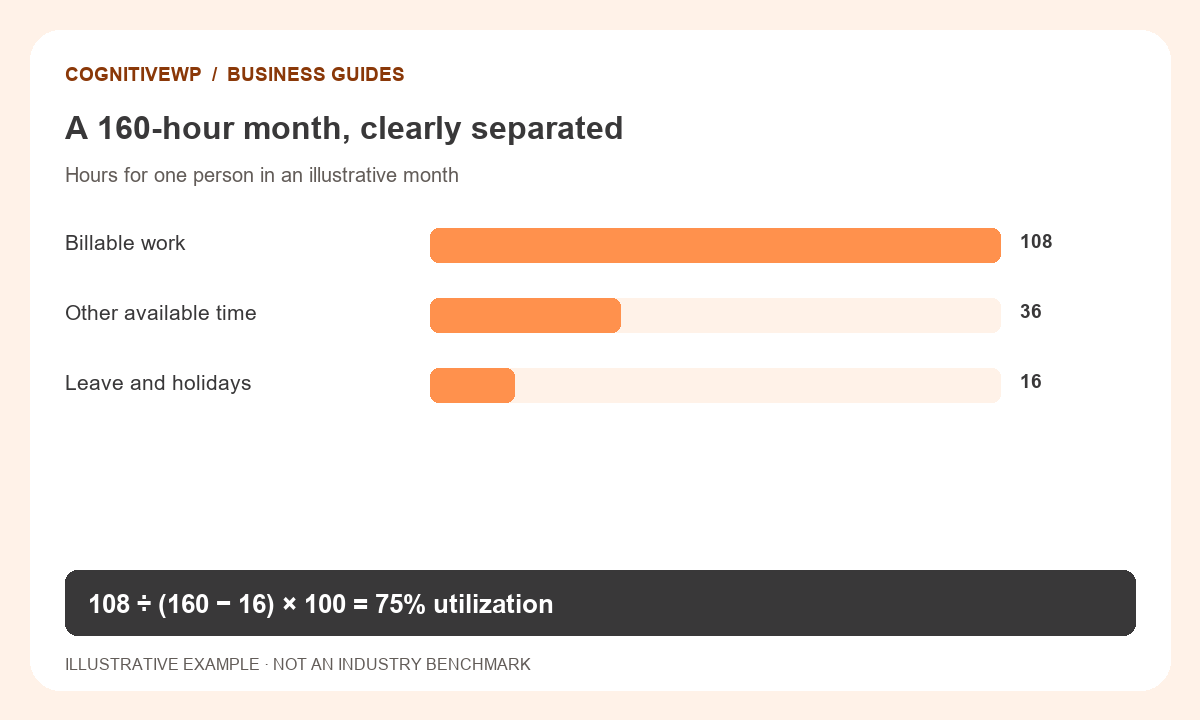
Billable Utilization Rate: Calculate Capacity Without Hiding Nonbillable Work
Billable utilization measures how much of your available working time goes to billable client work. The calculation is simple. Choosing the right hours—and understanding what the percentage leaves out—takes more care.
Read the guide →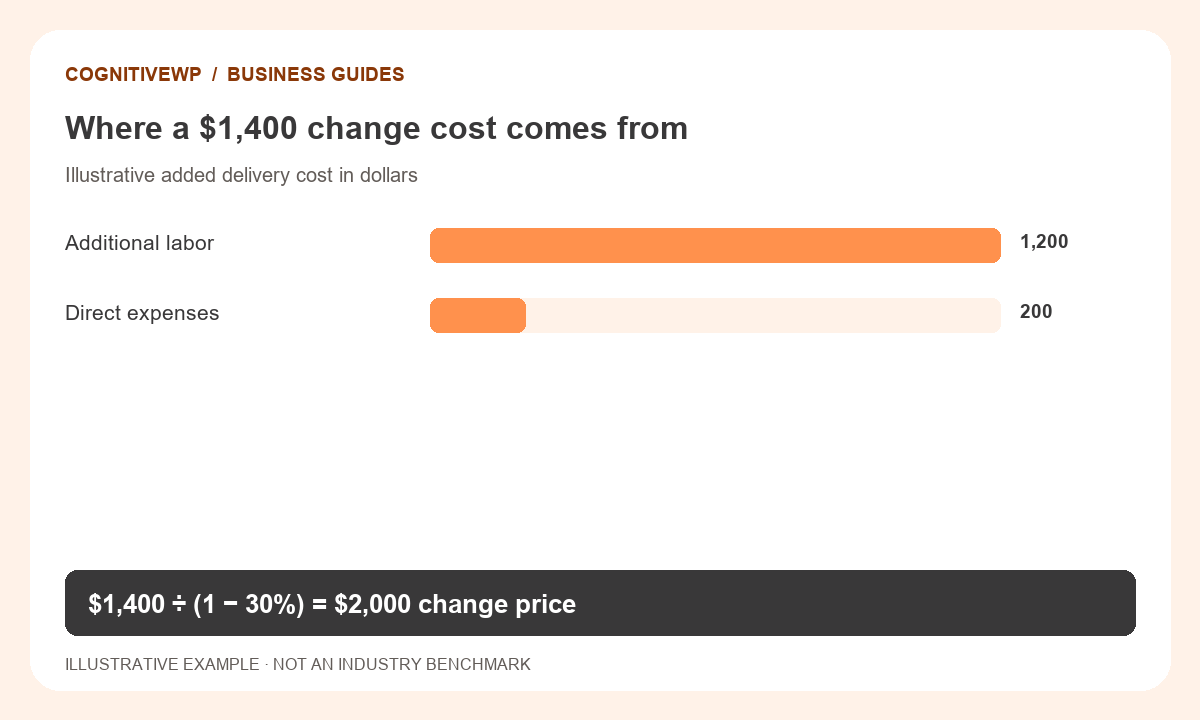 Agency & Consulting
Scope Creep Cost: Turn Extra Requests into a Clear Change Estimate
Scope creep happens when project work expands beyond the agreed scope without a matching change to time, price, or resources. A small request can still have a measurable cost. This guide shows how to estimate that cost before deciding what to do.
Read the guide →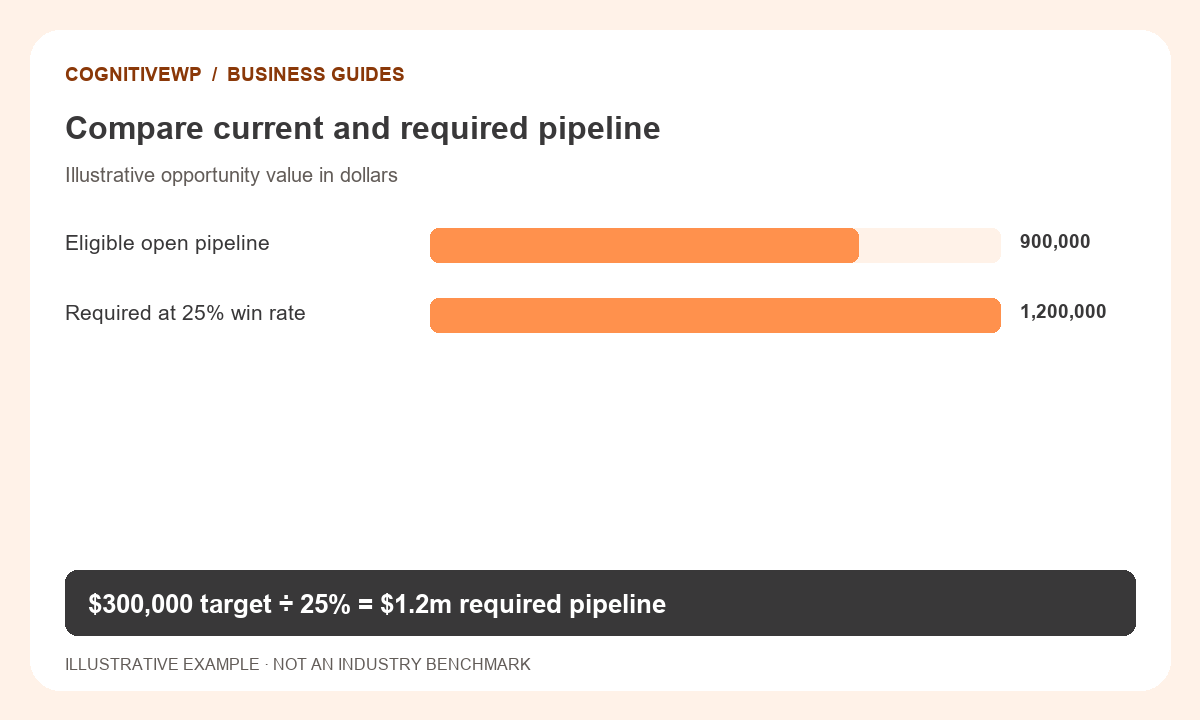 Sales & Revenue
Sales Pipeline Coverage Ratio: Match the Pipeline to the Revenue Target
Sales pipeline coverage compares eligible open opportunities with the revenue still needed in a period. It helps reveal a pipeline gap, but the ratio only makes sense when the target, opportunity values, and win-rate definition match.
Read the guide →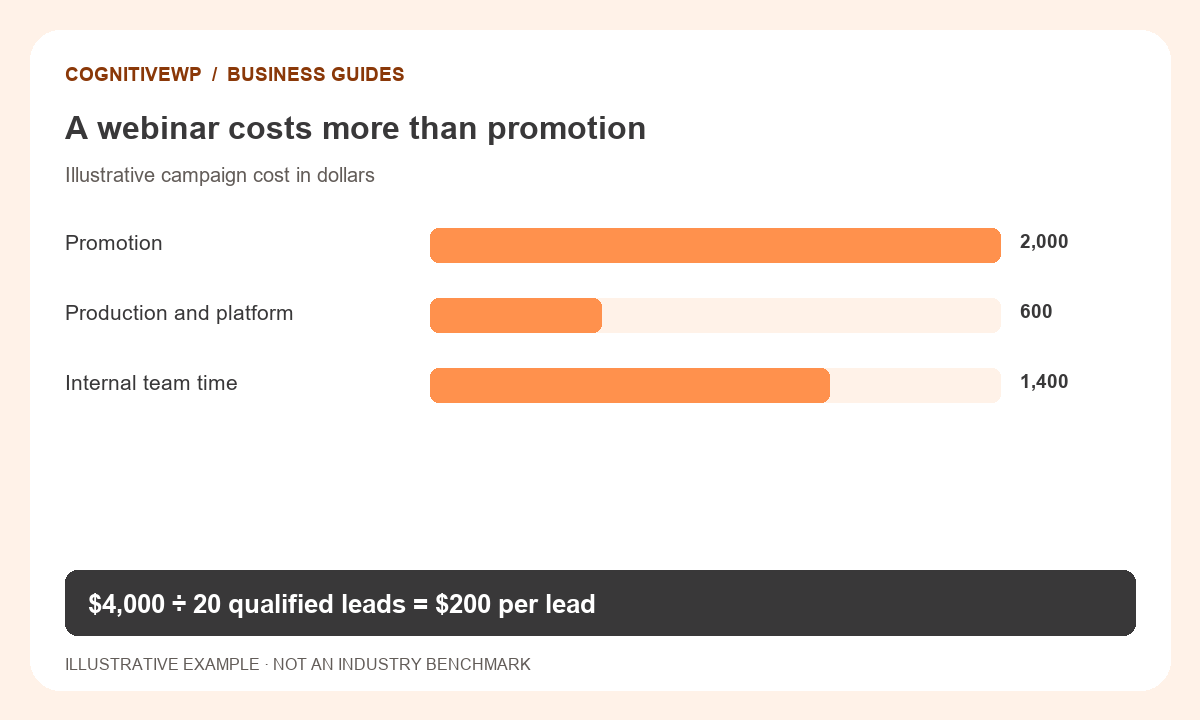 B2B Marketing
Webinar Cost per Qualified Lead: Measure the Full Campaign Cost
Webinar cost per qualified lead divides the campaign’s assigned cost by the leads that meet your stated criteria. It is more useful than a registration-only metric when you need to understand the cost of reaching relevant potential buyers.
Read the guide →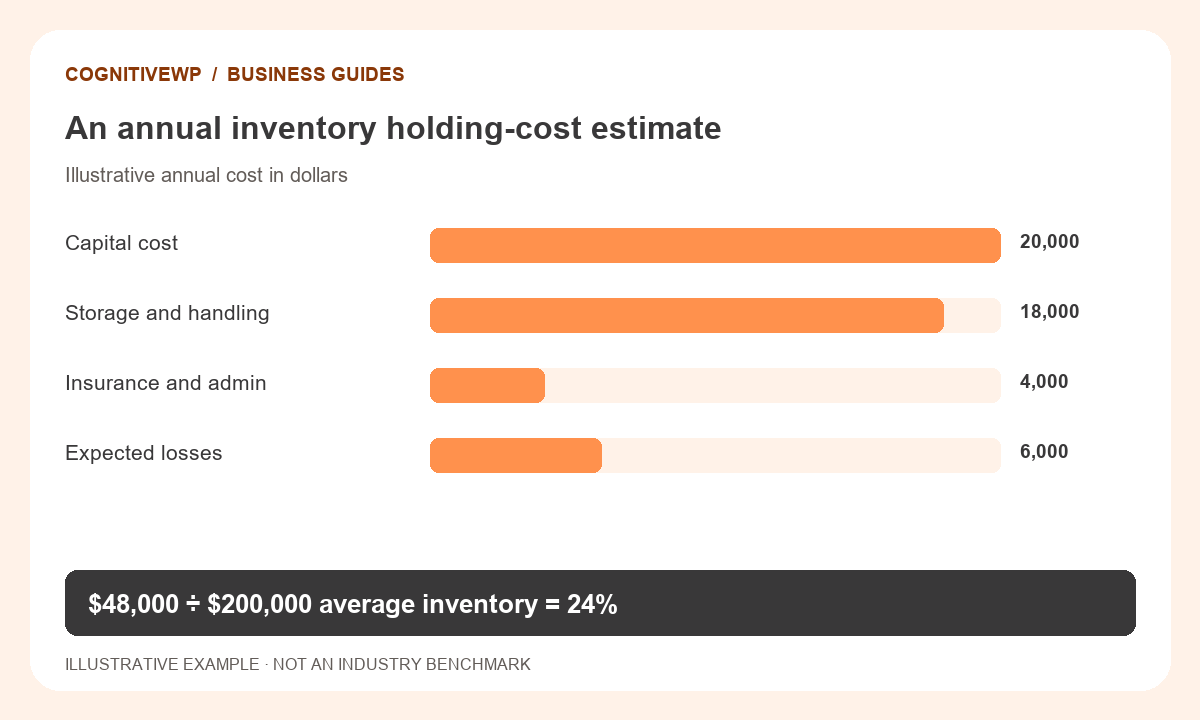 Procurement & Inventory
Inventory Carrying Cost: Build an Annual Estimate Without Double Counting
Inventory carrying cost estimates the annual cost of holding stock. It includes more than warehouse rent: money tied up in products, allocated support costs, and expected losses can all affect the economics of keeping inventory.
Read the guide →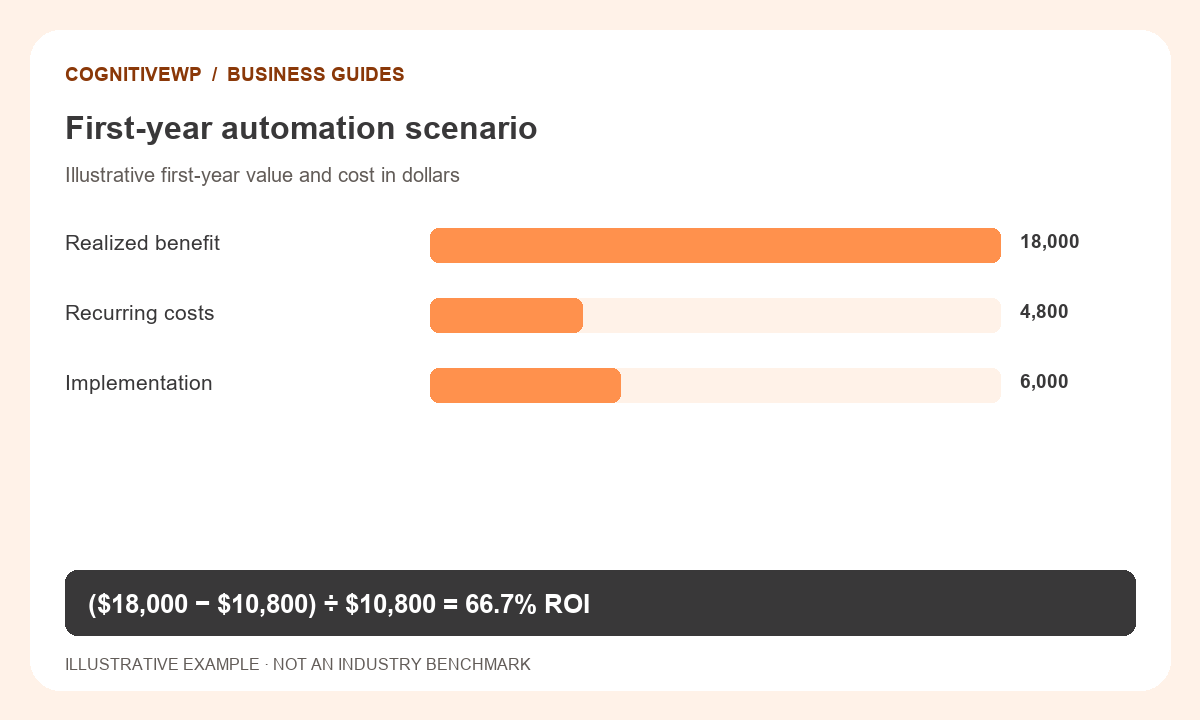 Software & Automation
Workflow Automation ROI: Separate Time Released from Real Business Benefit
Workflow automation ROI compares the benefit of a changed process with the cost of implementing and running it. The important step is deciding how much saved time becomes a defensible benefit, rather than treating every released minute as cash savings.
Read the guide →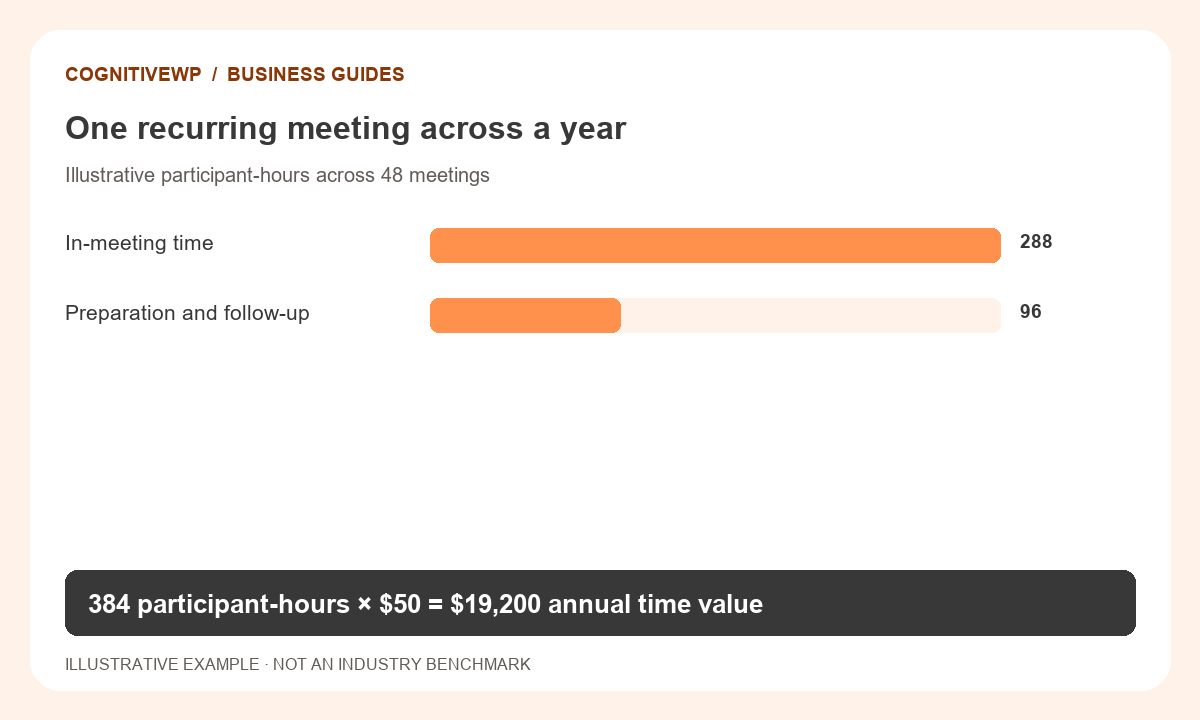 Meetings & Productivity
Recurring Meeting Cost: Calculate Participant Time, Preparation, and Annual Effort
Meeting cost puts a value on the participant time used by a meeting, including preparation and follow-up. It helps compare meeting designs, but it does not tell you whether a meeting is worthwhile or how much cash you will save by canceling it.
Read the guide →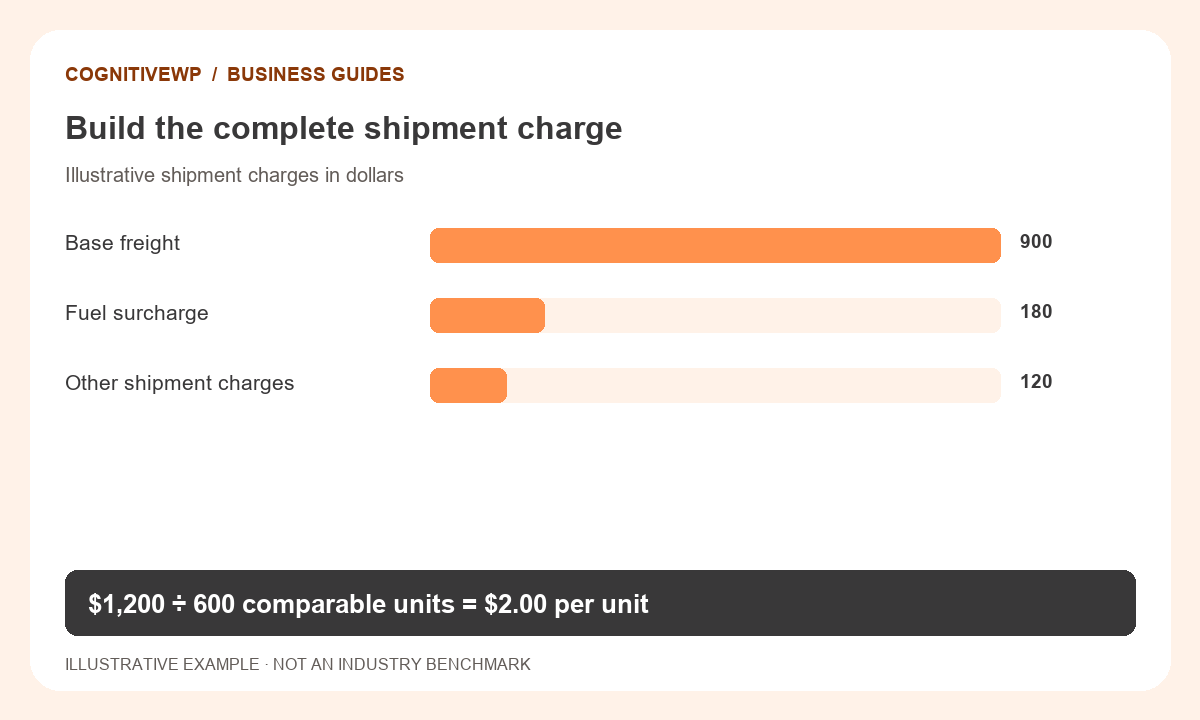 Logistics & Warehousing
Freight Cost per Unit: Allocate a Shipment Without Distorting Product Costs
Freight cost per unit spreads the transport cost of a shipment across the units it contains. It is a useful planning measure when units are comparable. Mixed shipments need more care because a small item and a bulky item may not use the same transport capacity.
Read the guide →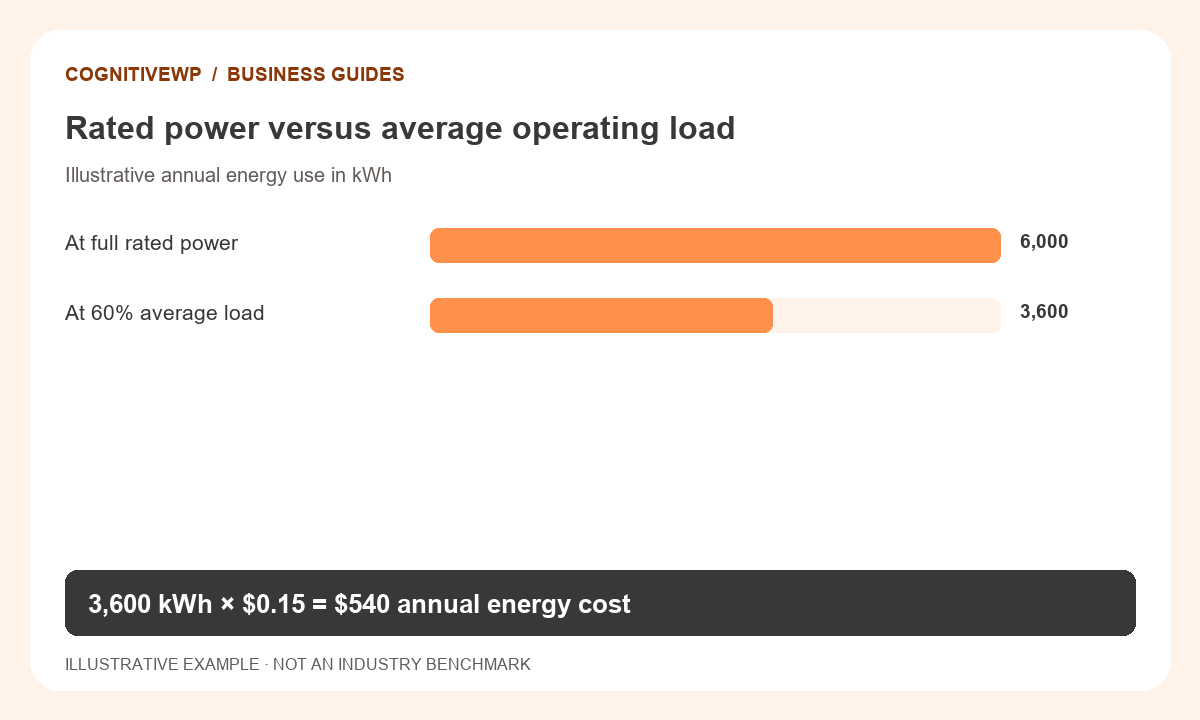 Business Energy
Equipment Electricity Cost: Convert Watts and Operating Hours into a Useful Estimate
Equipment electricity cost estimates the energy used by a device or group of similar devices. You need power, operating time, and the relevant price per kilowatt-hour. Rated power alone does not tell you the annual cost.
Read the guide →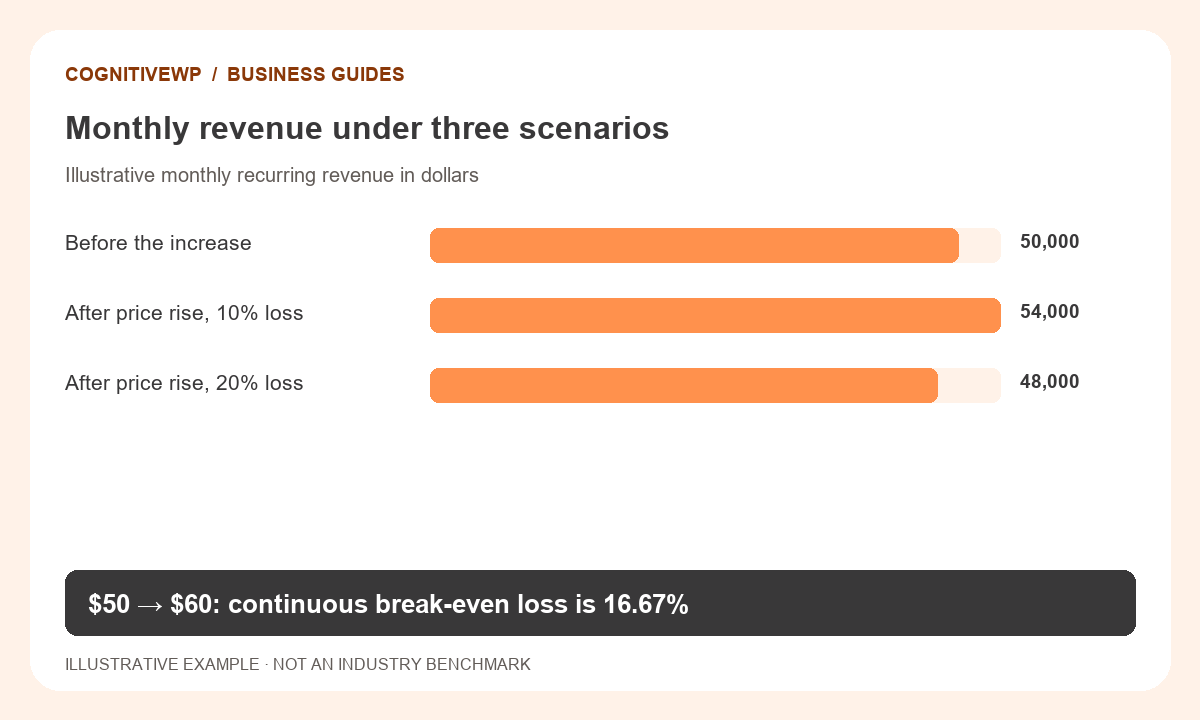 SaaS Pricing & Economics
Price Increase Break-Even Churn: How Much Customer Loss Offsets a Higher Price?
Price increase break-even churn estimates how much one-time customer loss would leave recurring revenue unchanged after a price increase. It is a scenario calculation for a comparable customer group, not a prediction of how customers will respond.
Read the guide →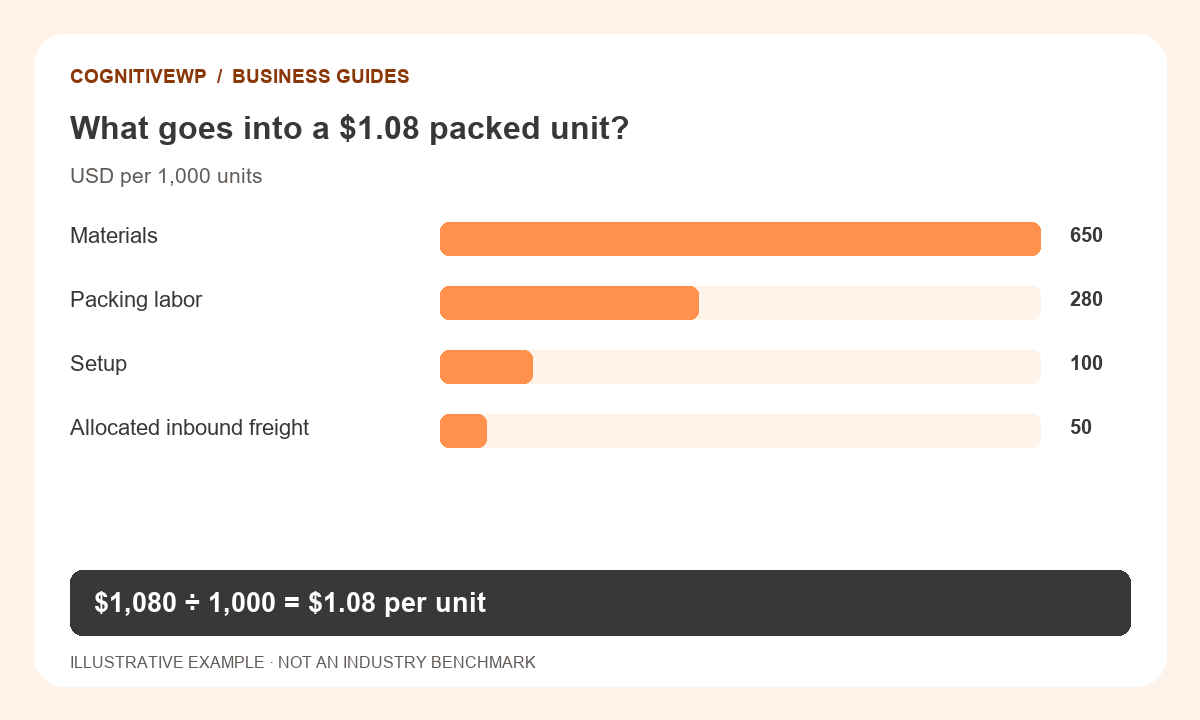 Packaging Operations
How to Calculate Packaging Cost per Unit: Materials, Labor, and Waste
Packaging cost per unit is the cost of preparing one usable product or shipment for delivery. A useful estimate includes more than the box: materials, packing labor, setup charges, and waste all affect the amount you spend.
Read the guide →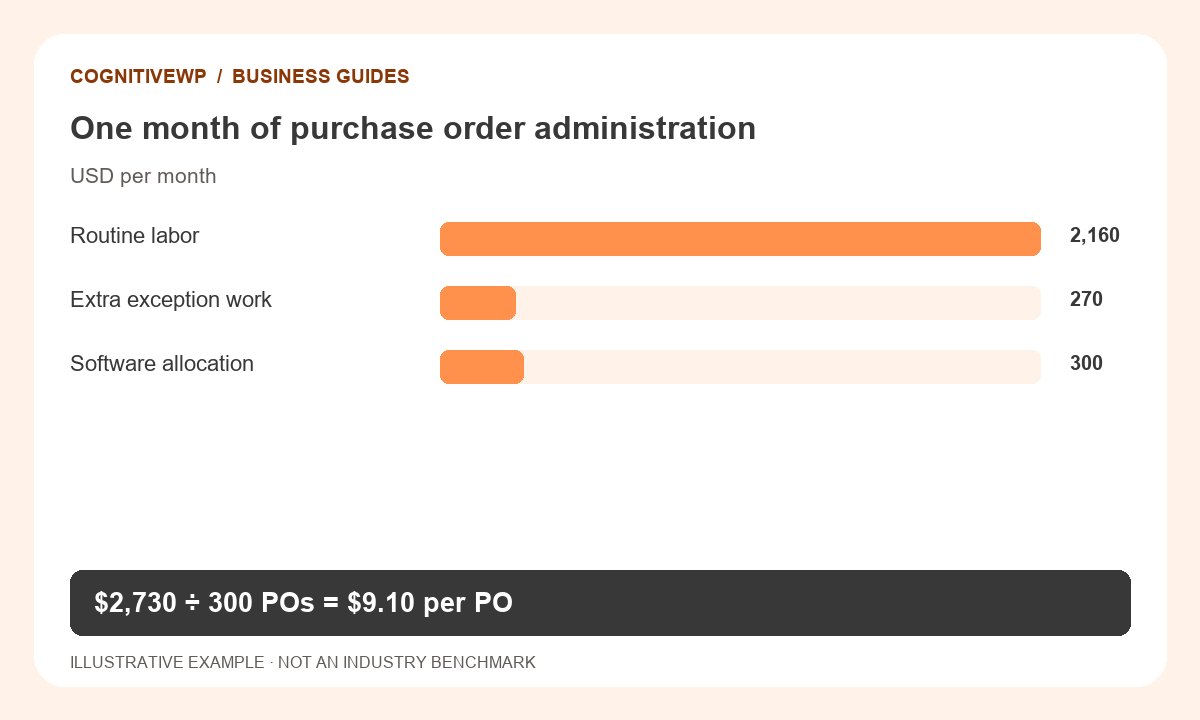 Purchase Order Administration
How to Calculate Purchase Order Processing Cost
Purchase order processing cost measures the administrative resources used to handle a purchase order. It is separate from the price of the goods or services being purchased.
Read the guide →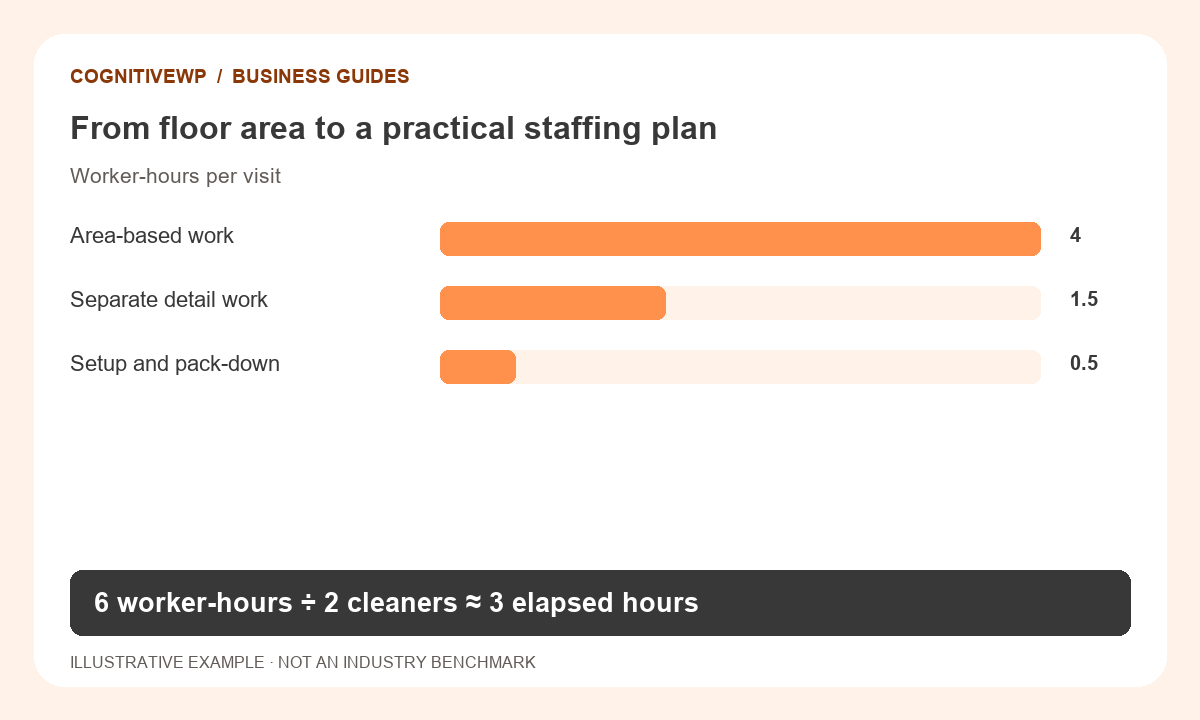 Commercial Cleaning
How to Calculate Cleaning Labor Hours from Square Footage
A cleaning labor-hours estimate turns a defined cleaning scope into a staffing plan. Start with cleanable area and a task-specific production rate, then add work that a floor-area rate does not cover.
Read the guide →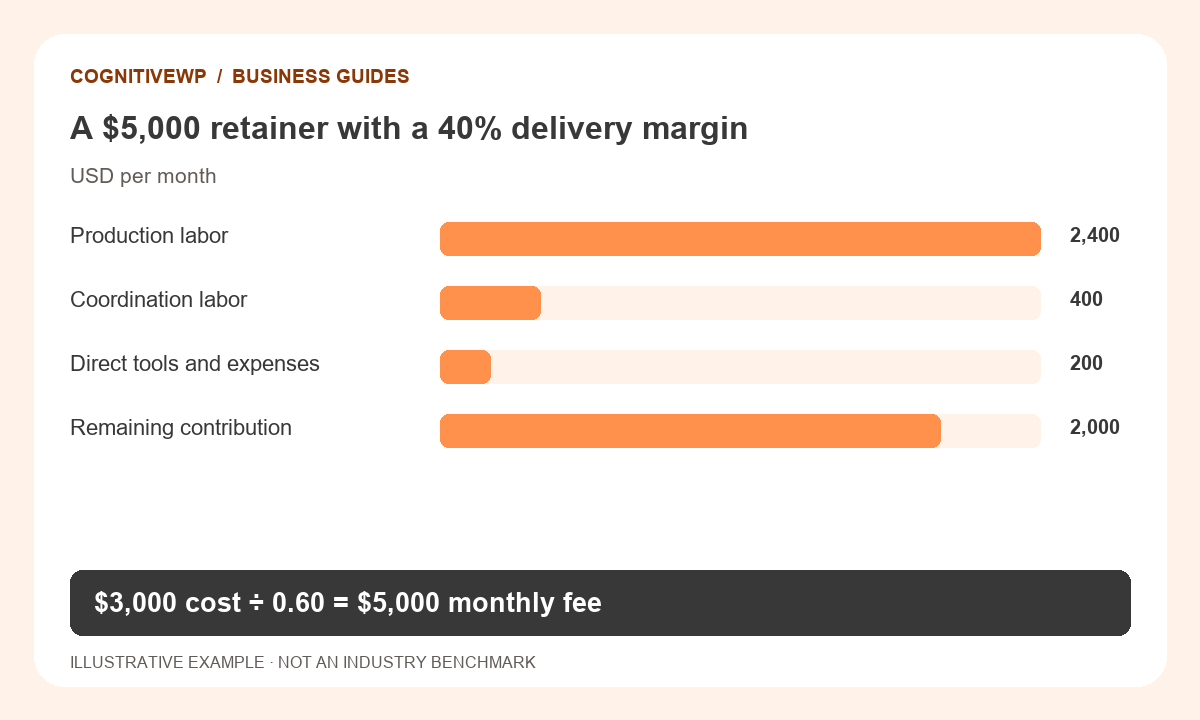 Agency & Consulting
How to Price an Agency Retainer Without Underestimating Delivery Costs
A profitable agency retainer starts with a realistic delivery plan. The monthly fee needs to cover the work the client will actually receive, including coordination and revisions, rather than only the visible production tasks.
Read the guide →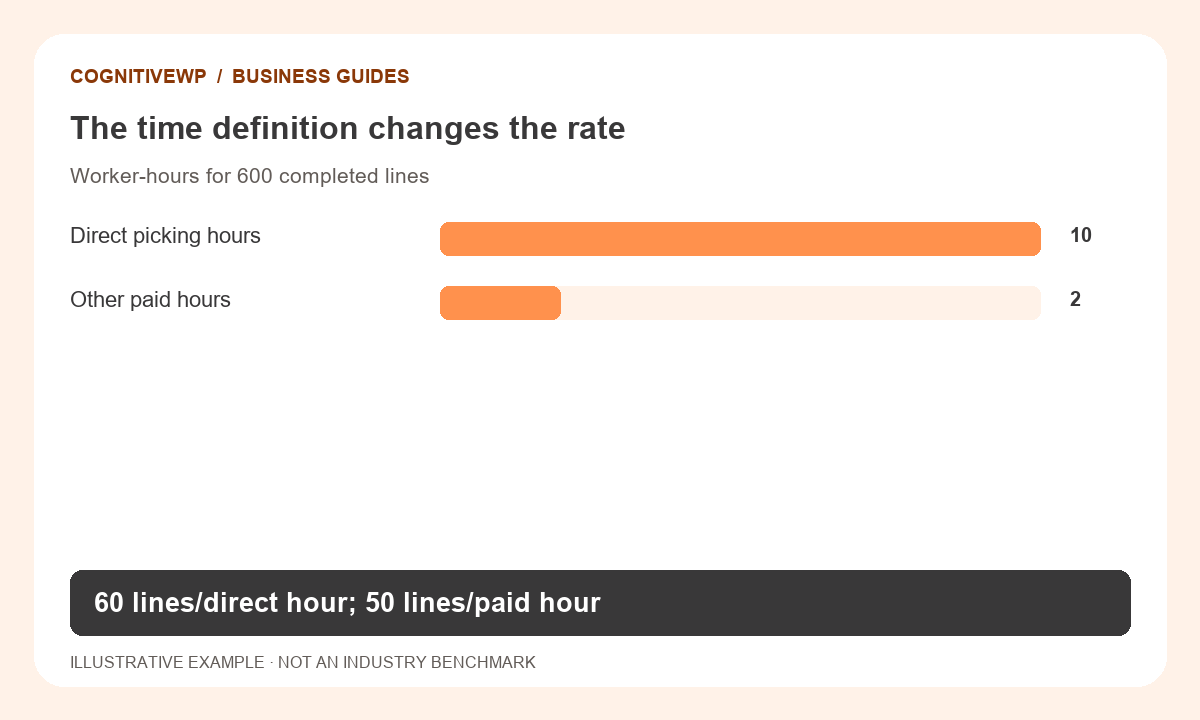 Order Fulfillment
Warehouse Picking Productivity: Calculate Lines Picked per Hour
Warehouse picking productivity describes how much picking work is completed for each hour of labor. A useful measure starts with a precise unit: order lines, individual items, cases, and full orders describe different workloads.
Read the guide → Employee Training
Training Cost per Employee: What to Include and How to Calculate It
Training cost per employee helps you budget a learning program and explain the resources it requires. The result depends on whether you count only direct expenditure or also include the value of employees’ paid learning time.
Read the guide →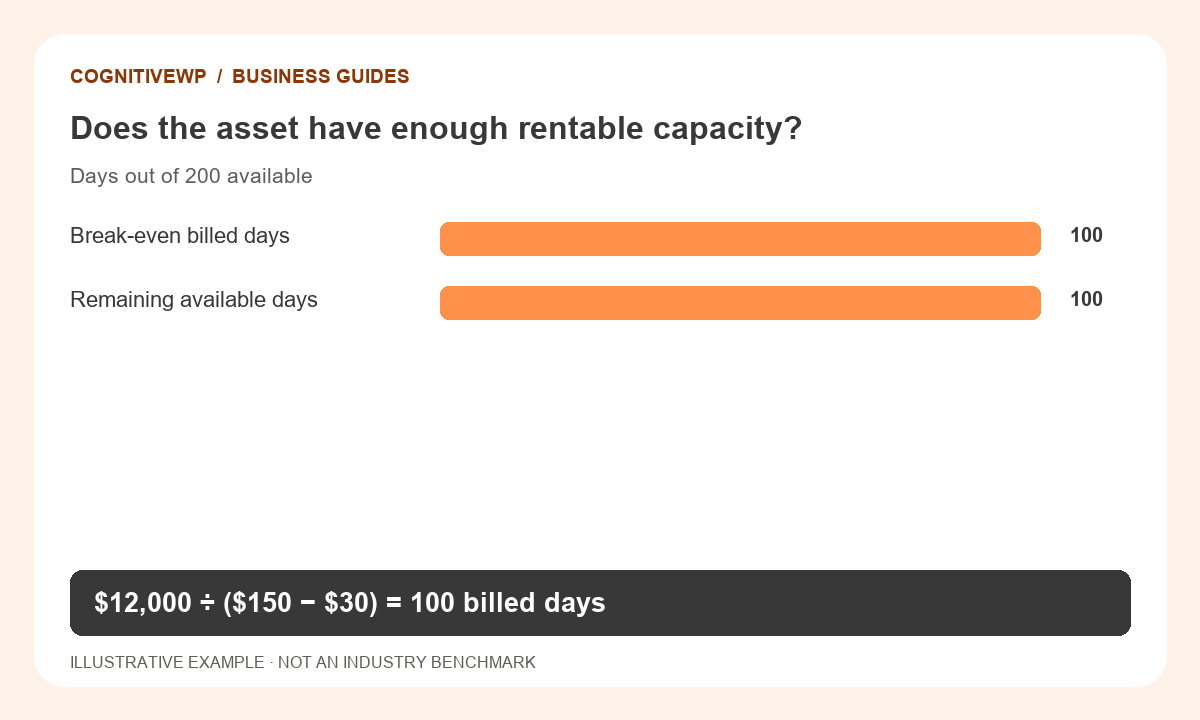 Equipment Rental
 Break-Even: How Many Rental Days Do You Need?
An equipment rental break-even estimate shows how many billed rental days are needed to cover the fixed costs included in your model. It helps you test whether an asset’s earning requirement fits its realistic availability.
Read the guide →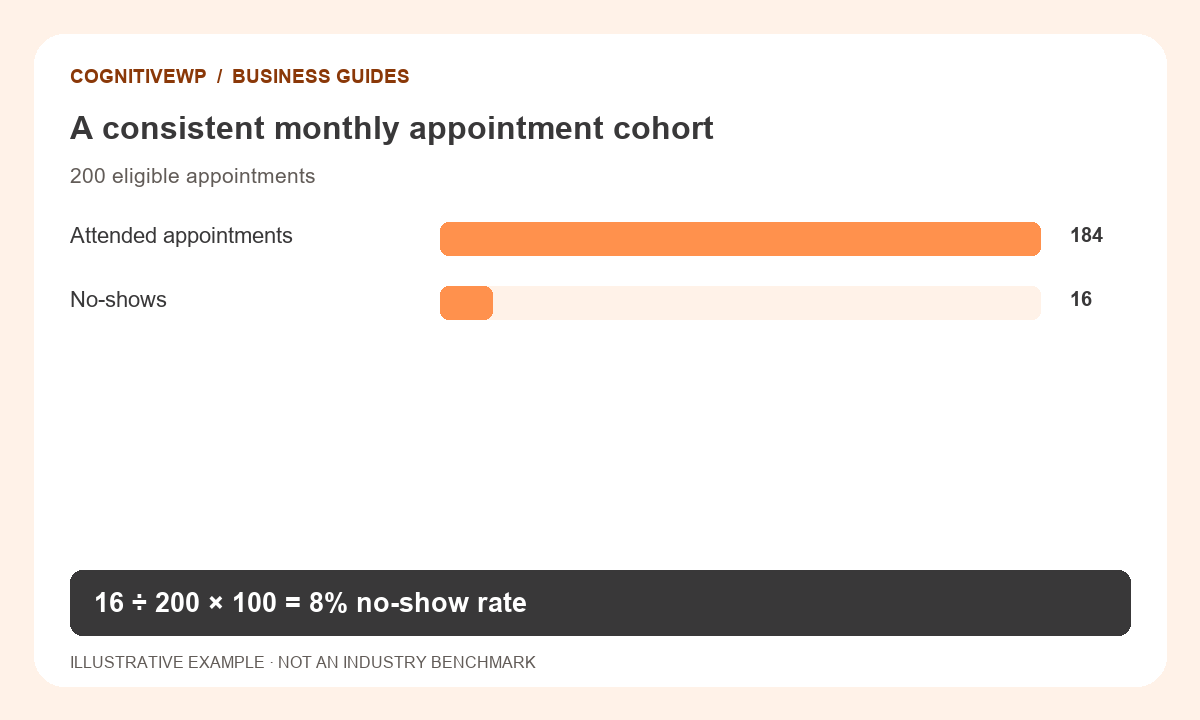 Appointment Operations
How to Calculate Appointment No-Show Rate and Handle Cancellations
Appointment no-show rate measures how often eligible scheduled appointments are missed without being completed under your attendance policy. A reliable percentage starts with consistent booking statuses and a clear cancellation cutoff.
Read the guide →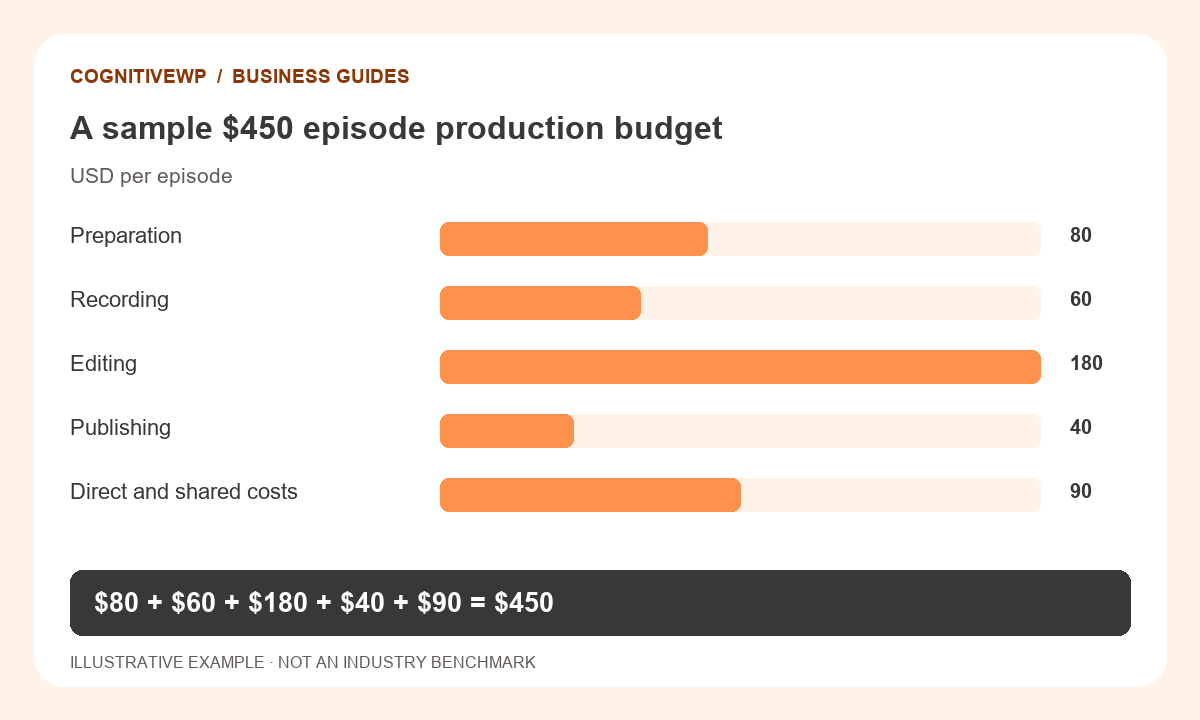 Podcast Production
 Cost per Episode: Build a Complete Budget
Podcast production cost per episode is the cost of taking one episode from preparation to a publishable deliverable. Recording duration alone does not capture the research, editing, review, and publishing work behind it.
Read the guide →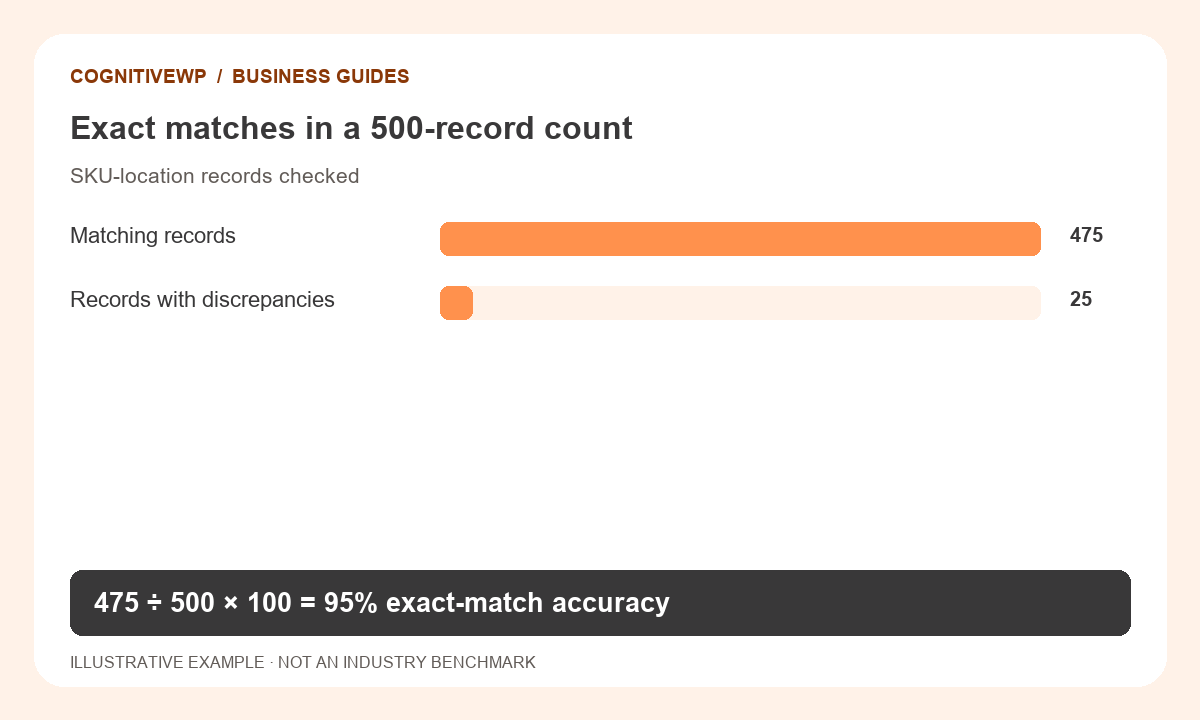 Inventory Audits
Inventory Record Accuracy: Exact Matches vs. Quantity Variance
Inventory record accuracy measures how reliably stock records agree with a physical count under a defined matching rule. Exact-match accuracy and quantity variance reveal different kinds of problems, so they should not be treated as interchangeable percentages.
Read the guide →Put the explanation into practice
Explore 103 free calculators across 50 business categories. Each tool explains its inputs, formula, and limitations so you can compare your own scenarios.